Bumble Bees IRELAND
Bumble Bees in Ireland: Complete Guide to Species, Conservation & Management
Ireland's bumble bees are among our most important and beloved pollinators, playing a crucial role in maintaining biodiversity and supporting agriculture. These fuzzy, charismatic insects face unprecedented challenges from habitat loss, climate change, and human development. Understanding Irish bumble bee species, their ecology, and conservation needs is essential for protecting these vital pollinators.
This comprehensive guide explores Ireland's bumble bee species, their behavior, conservation status, and when professional management becomes necessary. Whether you're a nature enthusiast, farmer, or property owner, understanding bumble bees helps us all contribute to their protection.
Irish Bumble Bee Species: A Complete Overview
Ireland hosts 21 native bumble bee species, each with unique characteristics, habitat preferences, and conservation status. Understanding these species helps identify them and appreciate their ecological roles.
Common Irish Bumble Bee Species
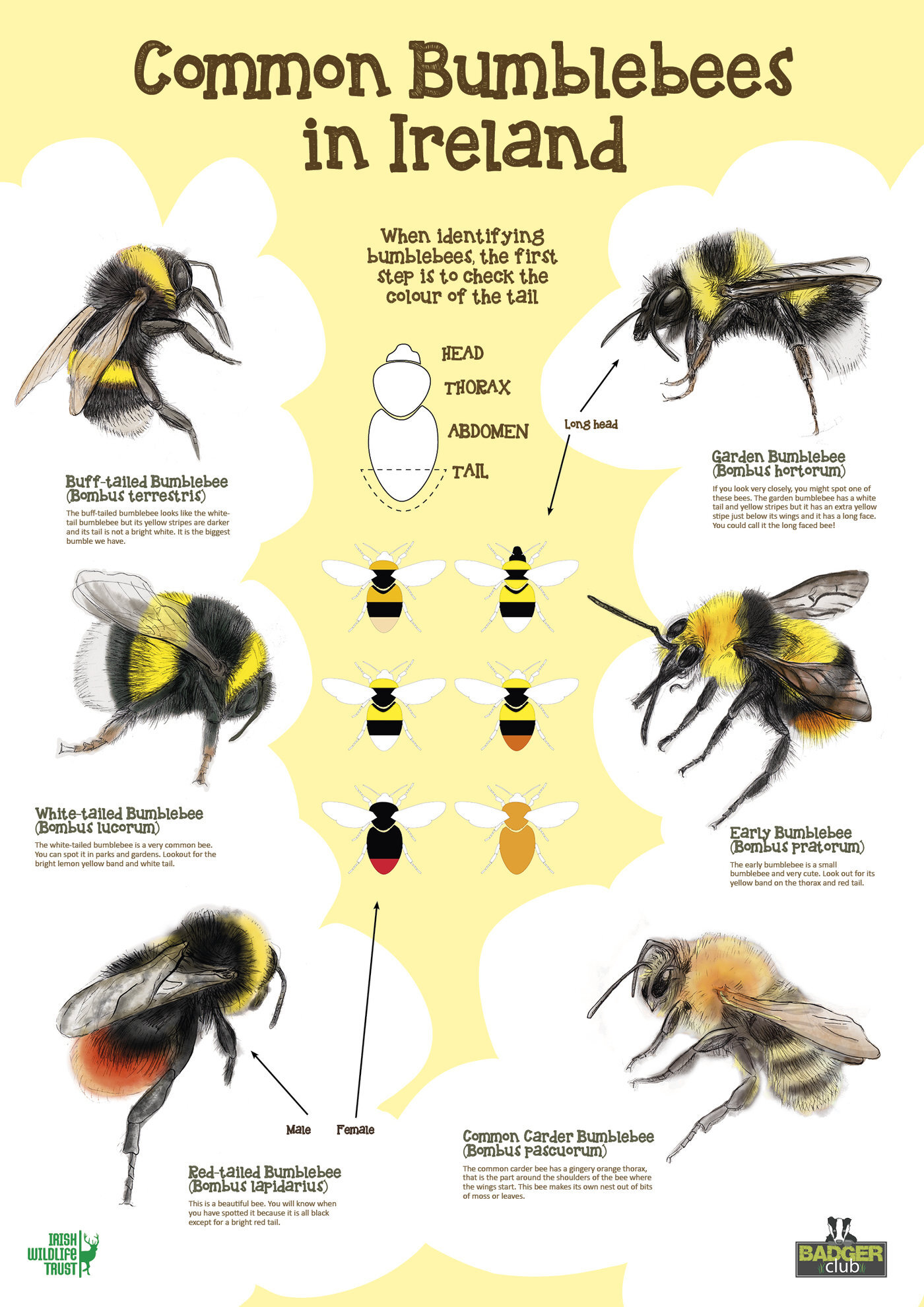
BUFF-TAILED BUMBLEBEE (BOMBUS TERRESTRIS)
Identification: Large queen (20-22mm), distinctive white/yellow tail, black body with two yellow bands. Habitat: Gardens, parks, farmland, urban areas - highly adaptable to human environments. Nesting: Underground burrows, compost heaps, old mouse holes, cavity spaces. Flight Period: February-November, one of the longest active seasons. Conservation Status: Common and stable throughout Ireland. Ecological Role: Important early-season pollinator, commercial greenhouse pollination.
White-tailed Bumblebee (Bombus lucorum)
Identification: Black body with bright white tail, two yellow bands, similar size to Buff-tailed. Habitat: Widespread across Ireland, gardens, meadows, woodland edges, upland areas. Nesting: Underground nests, stone walls, compost areas, undisturbed soil. Flight Period: March-October, peak activity during summer months. Conservation Status: Common but declining in some regions. Ecological Role: Excellent pollinator of wildflowers, crops, and garden plants.
Red-tailed Bumblebee (Bombus lapidarius)
Identification: Distinctive black body with bright red tail, no yellow markings. Habitat: Gardens, parks, coastal areas, limestone regions, urban environments. Nesting: Stone walls, rock crevices, old walls, underground cavities. Flight Period: March-September, strong summer activity. Conservation Status: Common in suitable habitats, stable populations. Ecological Role: Important pollinator of deep flowers, fruit trees, vegetables.
Tree Bumblebee (Bombus hypnorum)
Identification: Distinctive ginger/brown thorax, black abdomen, white tail. Habitat: Gardens, parks, woodland edges - newer species expanding range in Ireland. Nesting: Above-ground cavities, bird boxes, roof spaces, wall cavities. Flight Period: March-August, earlier emergence than many species. Conservation Status: Expanding range, increasingly common in suitable areas. Ecological Role: Excellent pollinator adapting well to urban environments.
Garden Bumblebee (Bombus hortorum)
Identification: Long-tongued species, black and yellow stripes, white tail, elongated head. Habitat: Gardens, parks, meadows with deep flowers, woodland clearings. Nesting: Surface nests in long grass, compost heaps, old bird nests. Flight Period: March-September, particularly active during flower-rich periods. Conservation Status: Common but sensitive to habitat changes. Ecological Role: Specialist pollinator of deep flowers like foxgloves, honeysuckle.
Rare and Declining Irish Bumble Bee Species
Great Yellow Bumblebee (Bombus distinguendus)
Identification: Large, uniformly yellow-brown, minimal black markings. Habitat: Western coastal areas, machair grasslands, flower-rich meadows. Conservation Status: Critically endangered - confined to specific western locations. Threats: Habitat loss, agricultural intensification, climate change. Protection Efforts: Targeted conservation programs, habitat restoration projects.
Moss Carder Bee (Bombus muscorum)
Identification: Variable coloration, often ginger/orange with darker bands. Habitat: Coastal grasslands, dunes, heathlands, flower-rich rough grassland. Conservation Status: Vulnerable - declining populations in many areas. Threats: Habitat fragmentation, coastal development, grazing changes.
Brown-banded Carder Bee (Bombus humilis)
Identification: Brown/ginger thorax with distinct banding pattern. Habitat: Coastal areas, rough grasslands, traditionally managed farmland. Conservation Status: Rare - limited distribution, population concerns. Threats: Agricultural intensification, habitat loss, reduced flower diversity.
Bumble Bee Life Cycle and Seasonal Activity
UNDERSTANDING BUMBLE BEE ANNUAL CYCLES HELPS EXPLAIN THEIR BEHAVIOR AND CONSERVATION NEEDS.
Annual Colony Cycle
Spring Emergence (February-April)
Queen Activity:
- Hibernated queens emerge from winter dormancy
- Active foraging for nectar to rebuild energy reserves
- Nest site selection and initial nest establishment
- First worker production begins
Critical Resources:
- Early flowering plants like willow, crocus, dandelion
- Suitable nesting sites with protection and insulation
- Minimal disturbance during vulnerable establishment phase
Colony Growth (May-July)
Population Expansion:
- Worker production increases rapidly
- Foraging range expansion as colony grows
- Nest construction and maintenance intensifies
- Division of labor within colony develops
Resource Requirements:
- Diverse flower resources for continuous nectar and pollen
- Undisturbed nesting areas for colony development
- Suitable microclimates for brood development
Reproductive Phase (July-September)
New Queen Production:
- Sexual reproductives (new queens and males) produced
- Mating flights and courtship behaviors
- Colony resources focused on reproduction
- Preparation for next year's cycle
Colony Decline (September-November)
Natural End:
- Worker populations decline naturally
- Old queens and workers die off
- New queens seek hibernation sites
- Nest abandonment and winter preparation
Seasonal Flower Dependencies
Early Season (February-May):
- Willow, cherry, apple blossoms
- Dandelions, crocuses, primroses
- Garden plants like pulmonaria, hellebores
Mid Season (May-August):
- Clover, vetches, wild flowers
- Fruit and vegetable crop flowers
- Garden perennials and annuals
Late Season (August-October):
- Heather, asters, late-flowering plants
- Ivy flowers, autumn-flowering bulbs
- Extended garden flowering varieties
Bumble Bee Ecology and Habitat Requirements
Successful bumble bee conservation requires understanding their complex habitat needs throughout their annual cycle.
Nesting Habitat Requirements
Underground Nesters (Most Irish species):
- Soil Conditions: Well-drained but not waterlogged soil
- Insulation: Natural materials like moss, leaves, animal fur
- Protection: Undisturbed areas safe from foot traffic
- Accessibility: Clear flight paths to and from nest entrances
- Microclimate: Stable temperatures and humidity levels
Above-ground Nesters (Tree bumblebees):
- Cavity Requirements: Enclosed spaces like bird boxes, wall cavities
- Height Preferences: 2-4 meters above ground level
- Weather Protection: Shelter from rain and strong winds
- Entry Points: Suitable holes for bee access (10-15mm diameter)
Foraging Habitat Needs
Flower Resource Requirements:
- Diversity: Multiple flower species for balanced nutrition
- Succession: Continuous flowering from spring through autumn
- Abundance: Sufficient quantities to support colony needs
- Accessibility: Flower shapes suitable for different bee tongue lengths
- Proximity: Foraging areas within 1-2km of nest sites
Landscape Connectivity:
- Corridors: Connected habitats allowing movement between areas
- Stepping Stones: Small flower patches linking larger habitats
- Minimal Barriers: Reduced obstacles to bee movement
- Scale: Landscape-level planning for population sustainability
Threats to Irish Bumble Bees
Multiple interconnected threats challenge bumble bee populations across Ireland, requiring coordinated conservation responses.
Habitat Loss and Fragmentation
Agricultural Intensification:
- Flower-rich grassland conversion to intensive crops
- Hedgerow removal eliminating nesting and foraging habitat
- Pesticide use reducing insect populations and flower resources
- Fertilizer application changing plant communities and reducing diversity
- Early and frequent mowing destroying nests and removing flowers
Urban Development:
- Green space loss to housing and commercial development
- Garden intensification reducing wildlife-friendly features
- Road construction fragmenting remaining habitats
- Lighting pollution disrupting natural behaviors
- Sealed surfaces eliminating potential nesting sites
Climate Change Impacts
Seasonal Timing Changes:
- Earlier flowering disrupting bee-flower synchronization
- Extended growing seasons altering traditional cycles
- Weather extremes affecting colony survival and reproduction
- Temperature fluctuations disrupting hibernation patterns
- Precipitation changes affecting nest site availability
Range Shifts:
- Northern species movement as temperatures warm
- Habitat suitability changes in traditional areas
- Coastal vulnerability to sea level rise and storms
- Mountain species pressure from upward habitat shifts
Disease and Parasites
Pathogen Spread:
- Commercial bee diseases spreading to wild populations
- Varroa mites affecting multiple bee species
- Nosema parasites reducing colony health and survival
- Viral infections transmitted between bee species
- Fungal pathogens affecting larval development
Pollution and Chemical Threats
Pesticide Impacts:
- Neonicotinoid insecticides affecting bee nervous systems
- Herbicide use reducing flower availability
- Fungicide applications affecting bee health indirectly
- Combined chemical exposure creating complex interaction effects
- Sublethal effects reducing foraging efficiency and navigation
Bumble Bee Conservation in Ireland
Effective conservation requires coordinated efforts across multiple scales, from individual gardens to national policy initiatives.
National Conservation Initiatives
All-Ireland Bumblebee Monitoring Scheme:
- Citizen science program tracking population trends
- Distribution mapping identifying conservation priorities
- Long-term monitoring documenting changes over time
- Research coordination supporting scientific understanding
- Public engagement building conservation awareness
Species Action Plans:
- Great Yellow Bumblebee recovery program in western Ireland
- Habitat restoration projects for declining species
- Site protection measures for critical habitats
- Research initiatives understanding species requirements
- Stakeholder engagement involving farmers and landowners
Habitat Creation and Management
Agri-environmental Schemes:
- Flower-rich margins providing season-long resources
- Traditional hay meadow restoration supporting diverse communities
- Hedgerow management maintaining connectivity and resources
- Pesticide reduction programs creating safer environments
- Grazing management balancing conservation with agriculture
Urban Conservation:
- Pollinator-friendly public spaces in towns and cities
- School garden programs engaging young conservationists
- Community pollinator projects building local capacity
- Green infrastructure incorporating bee needs into planning
- Native plant promotion supporting indigenous species
Garden Management for Bumble Bees
Individual gardens can make significant contributions to bumble bee conservation through thoughtful planning and management.
Creating Bumble Bee-Friendly Gardens
Plant Selection Strategy:
- Native Irish plants adapted to local conditions and bee needs
- Season-long flowering ensuring continuous resource availability
- Diverse flower shapes accommodating different bee species
- Mass plantings providing abundant resources in concentrated areas
- Avoid double flowers that lack accessible nectar and pollen
Recommended Native Plants:
Spring Sources:
- Pussy willow (Salix caprea) - critical early nectar
- Blackthorn (Prunus spinosa) - important tree blossom
- Primrose (Primula vulgaris) - early ground cover
- Dandelion (Taraxacum officinale) - abundant early resource
- Wild cherry (Prunus avium) - significant tree resource
Summer Abundance:
- White clover (Trifolium repens) - excellent long-flowering ground cover
- Red clover (Trifolium pratense) - important for long-tongued species
- Bird's-foot trefoil (Lotus corniculatus) - valuable meadow plant
- Field scabious (Knautia arvensis) - attractive to multiple species
- Foxglove (Digitalis purpurea) - specialist resource for garden bumblebees
Autumn Extensions:
- Heather (Calluna vulgaris) - critical late-season resource
- Irish ivy (Hedera hibernica) - valuable autumn flowering
- Devil's-bit scabious (Succisa pratensis) - important late flower
- Asters (Symphyotrichum species) - extended autumn resources
Garden Management Practices
Nesting Site Provision:
- Undisturbed areas with long grass and leaf litter
- Compost heaps providing insulation and protection
- Log piles and natural debris for ground nesters
- Bird boxes positioned for tree bumblebee use
- Rockeries and stone walls for crevice nesters
Maintenance Timing:
- Avoid cutting during peak activity periods (April-September)
- Rotational management maintaining some areas undisturbed
- Late winter clearing after hibernation period ends
- Minimal disturbance in known nesting areas
- Chemical-free gardening protecting bee health
When Professional Bumble Bee Management Becomes Necessary
While bumble bees are generally beneficial and should be conserved, certain situations require professional intervention for safety or property protection.
Situations Requiring Professional Assessment
Indoor Nesting:
- Loft spaces with large tree bumblebee colonies
- Wall cavities causing structural concerns
- Conservatories with established nests
- Outbuildings where access is compromised
- Commercial premises with health and safety implications
Safety Concerns:
- Allergic individuals at risk from bee proximity
- Children's play areas with aggressive defensive behavior
- High-traffic locations with increased sting risks
- Multiple colonies creating complex management challenges
- Aggressive species showing unusual defensive behavior
Property Issues:
- Structural damage from large established colonies
- Access problems to essential building areas
- Insurance requirements for professional documentation
- Business operations affected by bee activity
- Legal compliance with health and safety regulations
Professional Bumble Bee Management Approach
Conservation-First Strategy:
- Species identification ensuring appropriate protection levels
- Behavioral assessment determining actual risk levels
- Timing considerations minimizing impact on bee populations
- Relocation options when feasible and appropriate
- Habitat modification reducing future nesting attraction
Humane Management Methods:
- Live removal techniques preserving colony integrity
- Relocation to suitable habitats supporting conservation
- Minimal intervention approaches when safety permits
- Timing optimization for least conservation impact
- Follow-up monitoring ensuring successful outcomes
Bumble Bee Research and Citizen Science
Ireland's bumble bee research community relies heavily on citizen scientists and volunteers to monitor populations and understand trends.
Participating in Bumble Bee Conservation
Bumblebee Monitoring Scheme:
- Online recording platforms for sighting submissions
- Photography guidelines for species identification
- Survey participation in systematic monitoring
- Training workshops improving identification skills
- Local group involvement building conservation communities
Garden Surveys:
- Regular recording of garden bee visitors
- Plant preference documentation understanding resource use
- Nesting site monitoring contributing to habitat knowledge
- Phenology recording tracking seasonal activity patterns
- Long-term participation supporting trend analysis
Research Priorities
Current Research Areas:
- Climate change adaptation understanding species responses
- Habitat connectivity determining landscape requirements
- Disease dynamics monitoring pathogen spread and impact
- Pesticide effects assessing chemical impact on populations
- Urban ecology understanding city bee communities
Future Research Needs:
- Genetic studies understanding population structure
- Pollination effectiveness quantifying ecological services
- Restoration success evaluating conservation interventions
- Social behavior understanding colony dynamics
- Conservation genetics supporting species recovery programs
Economic Value of Irish Bumble Bees
Understanding the economic contribution of bumble bees helps justify conservation investments and policy decisions.
Agricultural Pollination Services
Crop Pollination Value:
- Field beans heavily dependent on bumble bee pollination
- Clover crops essential for livestock feed production
- Fruit trees benefiting from early-season bumble bee activity
- Vegetable crops including tomatoes, peppers, strawberries
- Seed production for many agricultural and horticultural crops
Economic Calculations:
- Annual pollination value estimated at €53 million for Ireland
- Replacement costs for artificial pollination services
- Agricultural productivity dependent on wild pollinator health
- Export earnings from pollinator-dependent crops
- Rural employment in pollinator-dependent sectors
Tourism and Recreation Value
Nature Tourism:
- Ecotourism revenue from bee-watching activities
- Garden tourism featuring pollinator-friendly displays
- Educational programs generating visitor income
- Conservation volunteering supporting rural economies
- Photography tourism focused on Irish wildlife
Professional Support for Bumble Bee Conservation
While bumble bees should generally be protected and conserved, professional expertise ensures appropriate management when intervention becomes necessary.
When to Contact Professionals
Expert Assessment Needed:
- Species identification for rare or declining species
- Conservation advice for property management
- Conflict resolution between human needs and bee conservation
- Risk evaluation for safety-sensitive situations
- Management planning for large properties or developments
Professional Services Available:
- Ecological surveys documenting bee populations
- Habitat assessments identifying improvement opportunities
- Management plans balancing conservation with land use
- Training programs for land managers and gardeners
- Emergency response for urgent safety situations
Exterminate Pest Control: Conservation-Focused Approach
At Exterminate Pest Control, we understand the critical importance of bumble bee conservation while recognizing situations where professional management becomes necessary.
Our Conservation Philosophy:
- Protection prioritized over elimination whenever possible
- Species expertise ensuring appropriate treatment decisions
- Humane methods minimizing impact on bee populations
- Conservation partnerships supporting research and protection
- Education provision helping property owners support bee conservation
Professional Services:
- Expert species identification and risk assessment
- Conservation-focused management plans
- Humane relocation when removal necessary
- Habitat advice for bee-friendly property management
- Emergency response for safety-critical situations
Contact Information for Bumble Bee Advice
Whether you need conservation advice or professional management services, expert guidance ensures the best outcomes for both property owners and bee conservation.
Exterminate Pest Control - Conservation & Management Specialists:
Conservation Services:
- Species identification and population assessment
- Habitat improvement advice and planning
- Property management guidance for bee conservation
- Educational consultations for schools and communities
- Research support for conservation projects
Professional Management:
- Risk assessment for human-bee conflicts
- Humane management solutions when intervention required
- Emergency response for urgent safety situations
- Relocation services preserving bee populations
- Follow-up monitoring ensuring successful outcomes
Contact Information:
- Website: exterminate.ie
- Email: info@exterminate.ie
- Phone: 085 263 5994
Available Support:
- Conservation advice and habitat guidance
- Professional species identification
- Humane management when necessary
- Emergency response for urgent situations
- Educational resources and training
Frequently Asked Questions About Irish Bumble Bees
Q: How many bumble bee species are native to Ireland?
A: Ireland hosts 21 native bumble bee species, ranging from common garden species like the Buff-tailed Bumblebee to critically endangered species like the Great Yellow Bumblebee found only in western coastal areas.
Q: When are bumble bees most active in Ireland?
A: Bumble bee activity varies by species, but generally runs from February through November. Queens emerge first in spring, colonies peak in summer (June-August), and new queens prepare for hibernation in autumn.
Q: Are Irish bumble bees endangered?
A: Several Irish bumble bee species face conservation concerns. The Great Yellow Bumblebee is critically endangered, while species like the Moss Carder Bee and Brown-banded Carder Bee are considered vulnerable or rare.
Q: What flowers do Irish bumble bees prefer?
A: Irish bumble bees prefer native plants including willow, clover, heather, foxgloves, and scabious. Different species have varying tongue lengths, so diverse flower shapes support more species.
Q: Do bumble bees sting?
A: Bumble bees can sting but are generally docile and rarely aggressive unless directly threatened or defending their nest. Unlike honey bees, bumble bees can sting multiple times.
Q: How can I help Irish bumble bee conservation?
A: Plant native Irish flowers, avoid pesticides, participate in citizen science monitoring, create undisturbed nesting areas, and support conservation organizations working to protect bumble bee habitats.
Q: Should I remove a bumble bee nest from my garden?
A: Most bumble bee nests should be left undisturbed as they benefit garden pollination and conservation. Professional assessment is recommended only for safety concerns or indoor nesting situations.
Q: What's the difference between bumble bees and honey bees?
A: Bumble bees are larger, fuzzier, and live in smaller annual colonies. They're better cold-weather fliers and important pollinators of native Irish plants, while honey bees are managed primarily for honey production.
Q: Can I attract specific bumble bee species to my garden?
A: Planting diverse native flowers with different blooming periods attracts various species. Long-tongued species like Garden Bumblebees prefer deep flowers, while others favor open, accessible blooms.
Q: Are there grants available for bumble bee conservation?
A: Various agri-environmental schemes and conservation grants support pollinator-friendly farming and habitat creation. Contact the Department of Agriculture and conservation organizations for current opportunities.
Support Irish bumble bee conservation through informed garden management and professional guidance when needed. Contact Exterminate Pest Control at 085 263 5994 for expert advice on balancing bee conservation with property management needs.
Contact Us
Bee Pest Control
Bees Nest Removal
Bee Pest Control Dublin, Kildare, Wicklow, Meath, Laois, Carlow, Offaly
info@exterminate.ie
0852635994